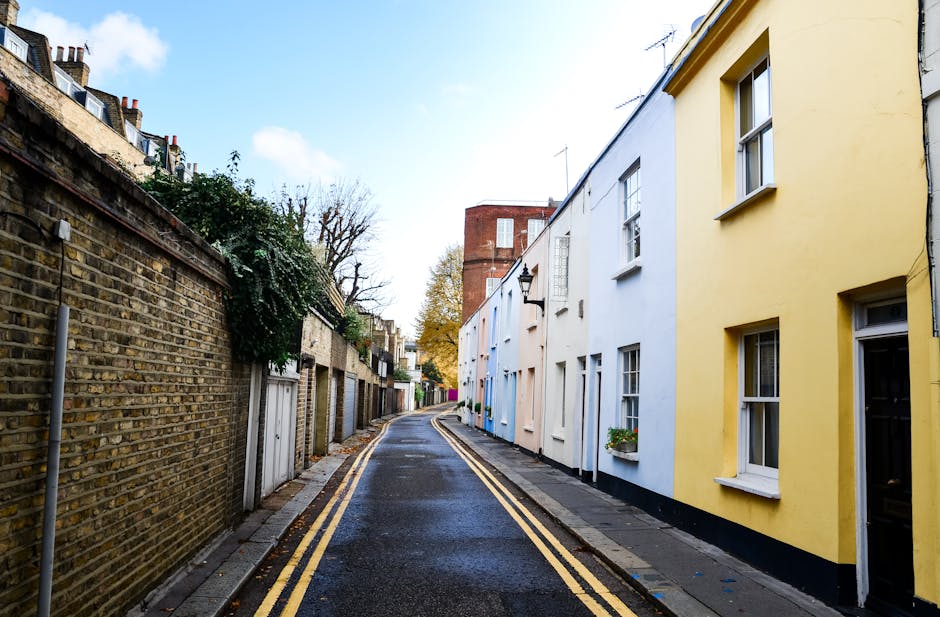
Finchley Central removals guide for narrow streets

Moving home or office in Finchley Central can be straightforward on paper and awkward in real life. The moment you add narrow streets, parked cars, tight corners, awkward stairwells, and the usual London time pressure, the job needs more than a van and a few boxes. This Finchley Central removals guide for narrow streets is here to help you plan sensibly, avoid common headaches, and keep the move calm enough that you can actually breathe for a minute.
Whether you are shifting a flat near the station, a family house off a side road, or a small office with equipment that cannot be manhandled without care, the key is preparation. A smart plan saves time, protects belongings, and reduces the chance of the kind of delay that makes everyone look at the driver and shrug. Let's get into the practical stuff.
Why Finchley Central removals guide for narrow streets Matters
Narrow streets change everything. Access can be limited, loading spaces may be scarce, and even a modest van can feel oversized once it meets a row of parked cars on a residential road. In Finchley Central, that often means the difference between a move that runs on time and one that drifts into a series of small delays. Nothing dramatic. Just lots of little friction points.
That matters because removals are already stressful. You are juggling keys, lifting, disassembly, paperwork, family schedules, and the mildly chaotic reality of "where did we put the kettle?" A tight street makes every stage slower if it is not planned properly. It can also raise the risk of knocks, scrapes, or carrying items farther than expected.
There is a second reason too: local knowledge helps. A removal approach that works on a wide suburban road may be clumsy in Finchley Central. The most efficient method is usually the one that fits the street, the building, and the timing of your move, not just the size of the job. If you are still comparing general moving options, the services overview is a useful place to understand how different removals are typically handled.
How Finchley Central removals guide for narrow streets Works
A move in a narrow street usually works best when the plan starts before moving day. The basic idea is simple: reduce the amount of time a vehicle spends waiting, reduce the number of trips in and out of the property, and choose access arrangements that suit the street rather than fighting it.
In practical terms, this often means using a smaller vehicle, splitting the load, pre-labeling items, and making sure the exit route from the property is clear. If the vehicle cannot park directly outside, the moving team needs to know that early. It sounds obvious, but people often leave this until the morning of the move. That is where the trouble starts.
For some homes, a man and van style service is a better fit than a larger removal lorry. A smaller vehicle can usually manoeuvre more easily around tight turns and parked cars. If you want to see how that approach is presented, have a look at man with van Finchley or man and van Finchley. Not every move needs a big rig. Sometimes smaller is simply smarter.
There is also the human part of the process. In our experience, the smoothest narrow-street moves happen when the customer and movers are on the same page about timing, access, and what needs extra care. A piano, a wardrobe with awkward dimensions, or a glass cabinet all need more thought than a stack of labelled boxes. For specialist items, piano removals Finchley is worth reviewing as a reminder that not everything should be treated like a standard box.
Key Benefits and Practical Advantages
Working carefully in Finchley Central's narrower roads is not just about avoiding problems. Done well, it brings real advantages.
- Less waiting time: a better-planned vehicle and loading strategy reduces time lost to parking or repositioning.
- Lower damage risk: fewer awkward manoeuvres usually means fewer accidental bumps.
- Better energy use: shorter carry distances and simpler access make the team more efficient.
- Less stress for you: when the access plan is sensible, moving day feels more manageable.
- Improved fit for flats and maisonettes: tight streets often go hand-in-hand with upper-floor properties, where access planning is everything.
There is a quieter benefit too: a well-run move feels professional. You notice it in the details. The van arrives at the agreed time, the team knows which entrance to use, and the boxes are handled in an orderly way rather than being shuffled around the pavement in a panic. It is calm. And calm is underrated.
If you are moving from a flat, the logistics can be even tighter. In that case, flat removals Finchley can be a helpful related read, especially if stairs, communal entrances, or limited kerbside space are part of the picture.
Who This Is For and When It Makes Sense
This guide is for anyone moving in or around Finchley Central where access is not generous. That includes:
- flat movers dealing with tight stairways and shared entrances
- homeowners on residential streets with parked cars on both sides
- students shifting smaller loads but needing quick, efficient transport
- small office teams moving equipment from compact premises
- people with one-off large items, such as a sofa, bed frame, or upright piano
It also makes sense if you are on a deadline. Maybe your completion is in the afternoon and you need the old place cleared promptly. Maybe the landlord is expecting keys back by a set time. Or maybe you simply want the move done before the day disappears into a blur of tape, dust, and "where's the charger?". If that sounds familiar, a service that can adapt to the street is the sensible option.
For urgent moves, same day removals Finchley may be relevant, although tight streets still benefit from advance planning where possible. Same-day does not have to mean chaotic. It just means quicker decisions.
Step-by-Step Guidance
1. Check the street before moving day
Take a slow walk outside your property and look at the road with a mover's eye. Can a van stop nearby? Are there yellow lines? Is there a bend that would make reversing awkward? Are bins, low branches, or permanent parking likely to get in the way? A two-minute check can save a two-hour headache. Honestly, that small recon walk is worth it.
2. Measure the key items
Measure furniture that has to pass through doors, hallways, and stair turns. If a wardrobe barely fits through the bedroom doorway on paper, it may need dismantling. Keep a note of the largest items first, because those are the things that usually decide the load plan. It is much easier to solve the awkward item before the van arrives.
3. Sort and reduce the load
One of the best ways to make a narrow-street move easier is simply to move less. Be ruthless with things you no longer use. Old cables, duplicate kitchen bits, the drawer full of random screws, the lot. Fewer items means fewer trips, less lifting, and a tidier exit route.
4. Pack for quick loading
Use sturdy boxes, keep heavier items at the bottom, and label rooms clearly. If you are organising your own packing, the guidance on packing and boxes Finchley can help you think through the basics. A labelled box may seem small, but on a tight road it prevents the team from having to stop and ask where everything belongs. That saves real time.
5. Choose the right vehicle size
This is where many moves succeed or fail. A bigger vehicle is not always better if the road is cramped. A more compact removal van Finchley setup may be easier to position and may reduce the need for complicated shuffling. The aim is not to impress the street. It is to complete the move without drama.
6. Agree the access plan in advance
Decide where the van should park, which entrance will be used, and whether any items need to be carried via a side gate or shared hallway. If there is limited loading time, tell the movers. If a key pickup is involved, make that clear too. Simple, direct communication really does help.
7. Keep the essentials separate
Set aside a bag or box for documents, chargers, medication, snacks, kettle items, and a change of clothes. You do not want these buried under three layers of towels and bubble wrap at 7:30 in the evening. Trust me, the tea bags matter more than they sound.
Expert Tips for Better Results
Here is the kind of advice that tends to make a genuine difference in Finchley Central rather than sounding good in theory.
- Time the move to avoid peak pressure: if you can choose, early starts often work better on busy residential roads.
- Use smaller loads per trip: when the street is tight, trying to move everything in one heroic run usually backfires.
- Protect corners and door frames: add simple padding around the property exit if items are large or awkward.
- Check building access rules: some blocks or managed properties have their own loading instructions, and these should be respected.
- Photograph anything fragile or valuable before the move: this is just sensible record-keeping.
Another useful tip: speak plainly with the removal team about what worries you most. Is it the sofa? The antique mirror? The very old family table that creaks if you look at it too hard? Say so. Movers are usually best when they know which items need extra patience.
If you are comparing business-style moving support, removal services Finchley and removal companies Finchley can help frame the sort of service you may need. For some jobs, the detail matters more than the label.
Common Mistakes to Avoid
Most moving problems are predictable. That is the annoying part. The good news is that they are also avoidable if you spot them early.
- Assuming parking will work itself out: do not leave this to luck.
- Underestimating the carry distance: if the van cannot stop directly outside, factor in extra walking and extra time.
- Forgetting dismantling time: beds, wardrobes, and desks often take longer than expected.
- Packing fragile items too loosely: empty space in boxes leads to movement, and movement leads to breakage.
- Not telling the movers about access issues: stairs, gates, locked entrances, and lift restrictions all matter.
- Booking the wrong size vehicle: too large can be as awkward as too small on a narrow road.
One especially common mistake is treating every street in Finchley Central as interchangeable. They are not. A road can look manageable in daylight and feel completely different when it is lined with cars, school traffic, or delivery vans. The street is the street. Plan for the actual conditions, not the imagined ones.
Tools, Resources and Recommendations
You do not need fancy kit to move well, but the right simple tools make a noticeable difference. Tape, labels, furniture blankets, trolleys, sturdy boxes, and a small toolkit are the basics. For many local moves, the most useful resources are the services that help you reduce friction before the van even arrives.
For example, if you want items packed and ready in an orderly way, you can follow the advice in package your items and wait for us to come. If you need the delivery time to fit around work, childcare, or building access, we will deliver at the best time for you is a useful phrase to keep in mind when discussing arrangements.
Storage is another practical option if the new place is not ready yet, or if the narrow street makes a phased move easier. In those cases, storage Finchley can be part of a sensible plan rather than a panic decision.
And if you want to understand the wider local service picture, removals Finchley gives you a broader idea of how local moving support can be structured. Straightforward, no fuss.
Law, Compliance, Standards, or Best Practice
Removal work in the UK is not just about moving boxes safely; it also involves sensible handling of property, access, and health and safety. Exact requirements can vary depending on the building, the street, and the service being used, so it is wise to check the practical details in advance rather than assume they will be fine on the day.
At a basic level, good practice means:
- moving in a way that avoids avoidable damage to property or vehicles
- lifting items safely and using the right equipment where needed
- respecting access arrangements in shared buildings
- being clear about timing, payment, and responsibilities before the move
- handling fragile or high-value items with appropriate care
If you are arranging a move involving children, shared hallways, or congested streets, simple safety awareness matters even more. It is not glamorous, but it is what keeps a move from going sideways. For peace of mind around moving practices, the insurance and safety information is worth reviewing before you book.
For a broader sense of the company's operating approach, the health and safety policy, terms and conditions, and payment and security pages can help answer practical questions about how the service is run. If you care about responsible disposal and reducing waste, recycling and sustainability is also a sensible related page to look at.
Options, Methods, or Comparison Table
Different moves in Finchley Central call for different approaches. Here is a simple comparison to help you think it through.
| Option | Best for | Strengths | Trade-offs |
|---|---|---|---|
| Small van / man and van | Single flats, smaller homes, awkward streets | Easier to park, easier to manoeuvre, often quicker in tight roads | May need more than one trip for larger loads |
| Larger removal vehicle | Full house moves with clear access | Can carry more in one go, good for bigger inventories | Harder to position in narrow streets, more likely to face access limits |
| Hybrid approach | Busy streets with mixed item sizes | Balances flexibility and carrying capacity | Needs good planning and clear communication |
| Storage-assisted move | Moves with timing gaps or phased delivery | Reduces pressure on moving day, helpful if access is constrained | Adds an extra step and requires coordination |
There is no perfect choice for everyone. The right option is the one that fits the road, the volume, and the building. Simple as that. A well-matched plan usually beats a "bigger is better" assumption.
Case Study or Real-World Example
Picture a typical Finchley Central flat move on a narrow residential road. The property is on the first floor, the road has parking on both sides, and the occupants have a double bed, a sofa, a bookcase, and around twenty boxes. Nothing outrageous, but enough to become messy if handled badly.
The team arrives with a compact vehicle that can stop closer to the property. The bed is dismantled first, the hallway is cleared, and the heavier boxes are loaded before the lighter ones. One neighbour's car is parked slightly awkwardly, so the carry route changes by a few metres. Not ideal, but manageable because everyone expected that kind of thing.
The result? The move stays controlled. No one is rushing down the pavement with a bedside lamp in one hand and a broken box in the other. There is still work, of course. There always is. But the day remains orderly, and that matters more than people realise in the moment.
This is also why local experience counts. For a narrow-street move, small judgments about van placement, sequence, and load order do a lot of the heavy lifting. Quite literally.
Practical Checklist
Use this checklist a few days before the move, and again on the morning itself.
- Confirm the moving date and arrival window
- Check street access, parking, and loading restrictions
- Measure large furniture and key doorways
- Label boxes by room and fragility
- Pack a separate essentials bag
- Disassemble large items where possible
- Protect floors, corners, and fragile surfaces
- Clear hallways, stairs, and exit routes
- Tell the movers about any tight turns, gates, or lifts
- Keep keys, documents, and contact details handy
- Have a plan for storage if the new property is not ready
- Check payment details and service expectations in advance
Little things stack up. That is the truth of it. Get the basics right and the rest becomes much easier.
Conclusion
A Finchley Central move on narrow streets does not need to be stressful, but it does need thought. The people who have the smoothest experience are usually the ones who plan access early, choose the right vehicle size, pack with intent, and stay realistic about street conditions. Nothing glamorous. Just practical discipline and a bit of local common sense.
If you are preparing a move and want it handled with care, it helps to speak to a team that understands tight roads, busy neighbourhoods, and the difference between a quick move and a rushed one. If you are still at the decision stage, start by reviewing the relevant service information and then build from there. And if you are already halfway through packing, take a breath. You are closer than it feels.
Get a free quote today and see how much you can save.
One last thought: the best moves are not the ones that feel heroic. They are the ones that quietly work.
Frequently Asked Questions
What makes narrow streets in Finchley Central difficult for removals?
Narrow streets can limit parking, make turning harder, and increase carry distances from the van to the property. That slows everything down unless the move is planned carefully.
Should I use a small van or a larger removal vehicle?
It depends on access and load size. For tight streets, a smaller van is often easier to manoeuvre. For larger house moves, a bigger vehicle may still be better if the road allows it.
How far in advance should I book a removal for a narrow street?
As early as you can, ideally once your moving date is reasonably fixed. That gives time to plan parking, vehicle size, access, and any special handling needs.
Can a man and van service handle a full move?
Yes, in many cases it can, especially for flats, smaller homes, or mixed loads. For larger properties, it may be better used as part of a wider moving plan.
What if the van cannot park outside my property?
That is common in tighter roads. The team will usually adapt by parking nearby and carrying items a short distance, but it is best to tell them in advance so time can be planned properly.
Do I need to dismantle furniture before moving day?
Not always, but it often helps with awkward items such as beds, wardrobes, and desks. If something looks tricky to get through a turn, dismantling can save a lot of hassle.
How can I make loading faster on a narrow road?
Label boxes clearly, keep the exit route clear, separate fragile items, and make sure the movers know about access restrictions before they arrive. Simple steps, but they add up.
Is storage useful for Finchley Central removals?
Yes, especially if the property dates do not line up or if you want to move in stages. Storage can reduce pressure on the actual moving day.
What should I do if I have a piano or another heavy item?
Tell the removal team early. Heavy or delicate items often need extra planning, and specialist handling may be the safest route. A piano is not the thing to "just wing".
How do I avoid damage in a tight hallway or stairwell?
Measure carefully, protect corners, use proper lifting methods, and clear the path before moving starts. A little preparation prevents the usual scuffs and scrapes.
Are same-day removals realistic in Finchley Central?
Sometimes yes, especially for smaller loads. But on narrow streets, same-day work still benefits from clear information about access, parking, and property layout.
Where can I find more help with moving planning?
You can explore the site's broader moving information, including house removals Finchley, student removals Finchley, and office removals Finchley if those better match your situation.